Coffee with Catt: Issue #5 | How To Get A Job In Finance
Most University graduates think their degree will help them in the real world.
Wrong.

My lucky break came when a mate’s father offered me two weeks work experience at a local stockbroker in Perth that turned into a job in Sydney. Say YES to every opportunity.
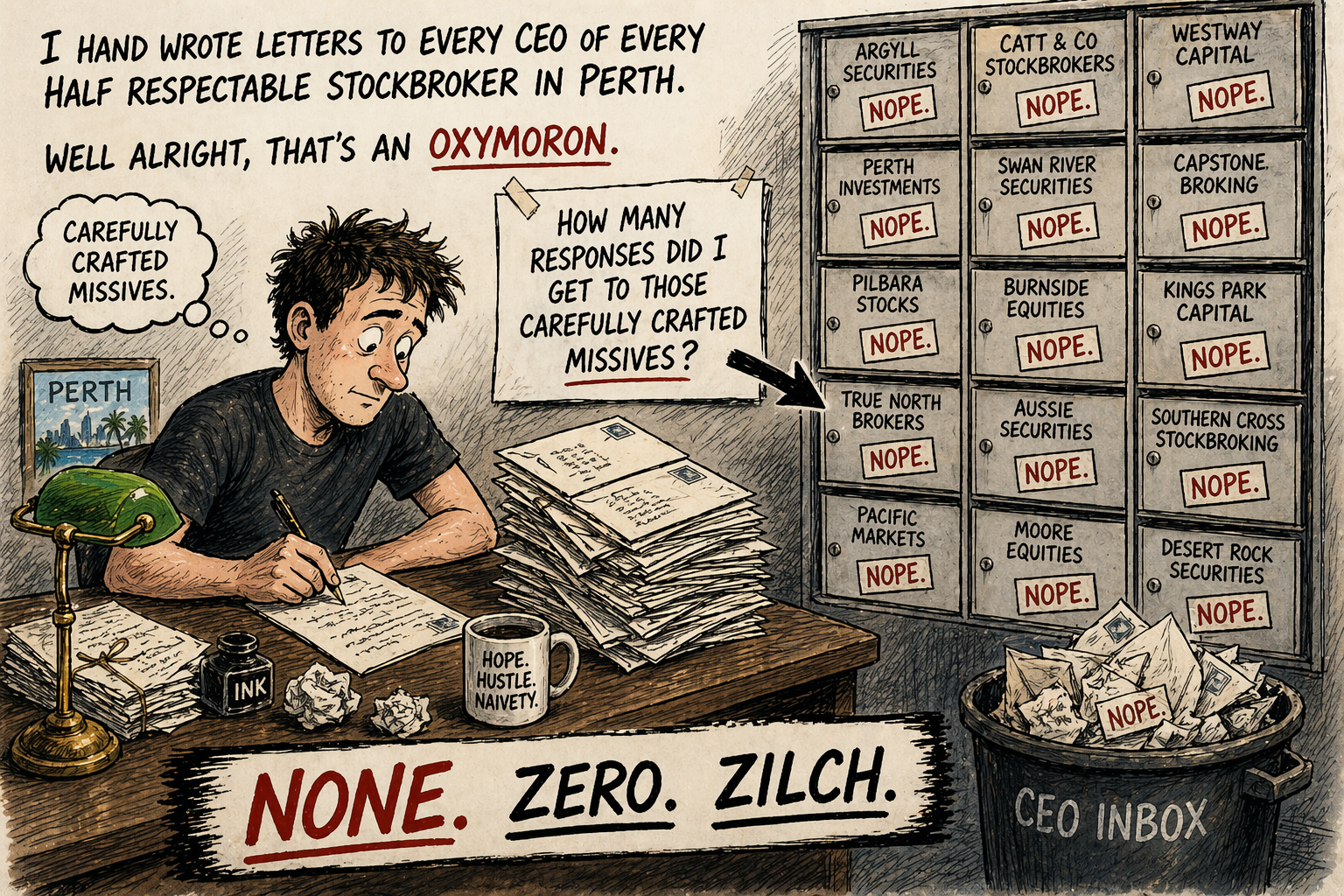
The year I was finishing my commerce degree I hand wrote letters to every CEO of every half respectable stockbroker in Perth. Well alright that’s an oxymoron. How many responses did I get to those carefully crafted missives?
None, zero, zilch.
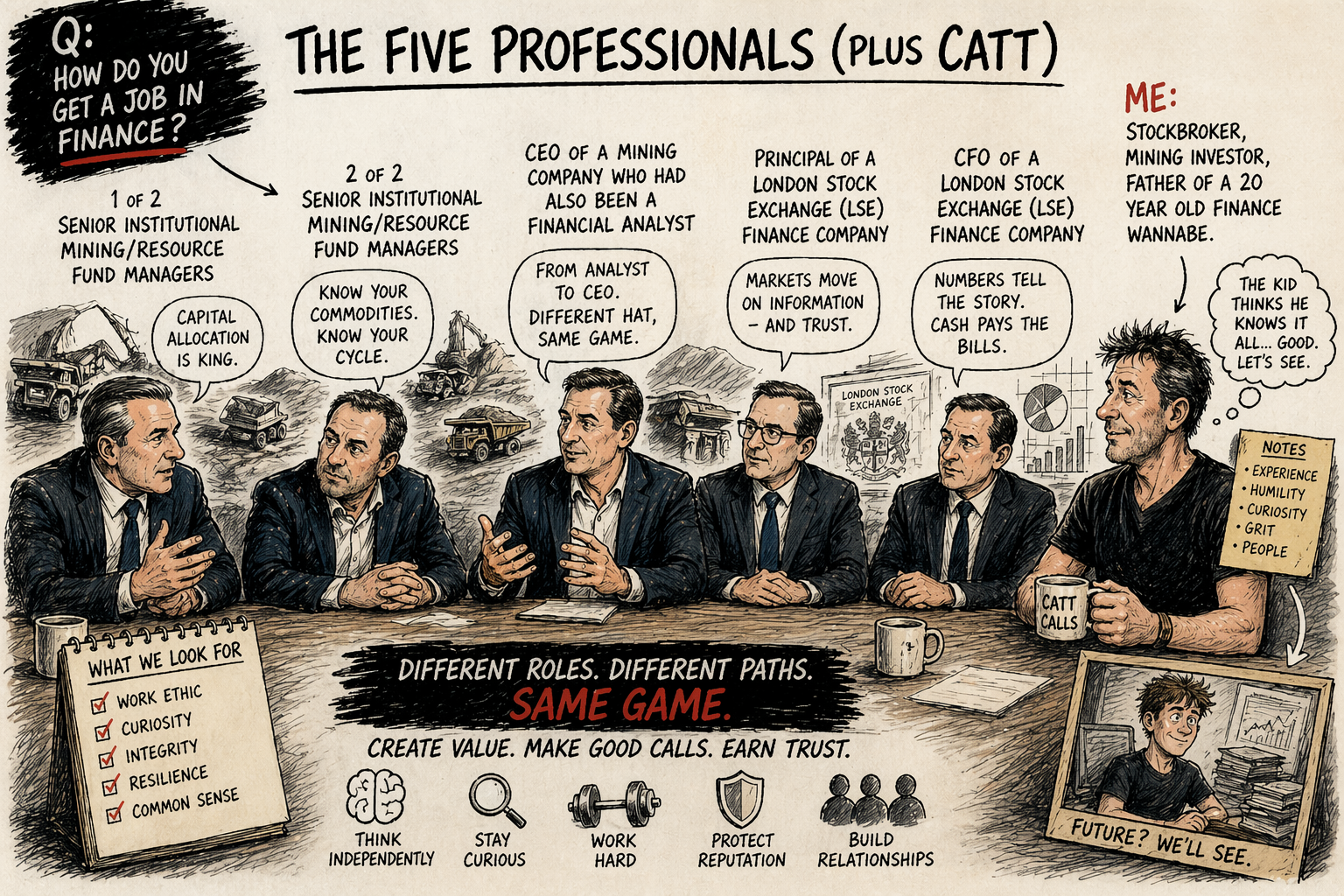
The quick takes below are the summary experience of six successful finance professionals in London between 30 and 60 years of age. They were all nice enough (thank you gentlemen) to spend an hour with four economics/finance undergraduates answering the question:
“How do you get a job in finance?”
The six professionals were:
Two senior institutional mining/resource fund managers
The CEO of a mining company who had also been a financial analyst
The Principal of a London Stock Exchange (LSE) finance company
The CFO of a LSE finance company
Myself, a stockbroker, mining investor, father of a 20 year old finance wannabe.
One last thing before you get the JUICE, below I summarised both the best advice from the finance professionals AND I asked the finance undergraduates what they learned from the day.
Hence the perspective of the master and the pupil. Enjoy.
Top 10 Tips from the Professionals for Getting a Job in Finance
Be on time and prepared. Punctuality signals you’ve got the rest of your life together. It’s a core indicator of competency.
Don’t fake expertise, stay curious instead. No one expects you to know everything in your first role. Ask intelligent questions (after Googling first), and when one task is done, go find another.
Network at every opportunity. Start now. Do your research before casual meetings or conversations. Every one is an interview!!! Prepare at least three relevant questions about the company or interviewer. Stalk them on LinkedIn, understand their culture and direction — this is what differentiates candidates.
Nail the interview basics: Keep your CV short and honest, dress appropriately, make good eye contact, be confident but not cocky, and break the ice with genuine human conversation early on.
Make your boss’s life easier. Balance skill acquisition with helpful grunt work. Extract data, handle repetitive tasks, make them look good. It signals humility and team spirit while you learn.
Read everything and become a stock junkie, start with the Financial Times, The Economist, an American paper, and a local one, daily. Work at least as hard as everyone else in the building. Read the greats, Warren Buffett, Michael Lewis etc. Follow the industries, companies and people that interest you, your passion is what will differentiate.
Learn to use AI and Excel well. Candidates who can demonstrate they’ll help a firm use AI and Excel better stand out. One graduate got hired after cold-calling and showing he could teach the team AI tools.
Put yourself in their shoes, understand what success looks like for the company, your boss, and your division. Align your efforts with their goals.
Build your character and resilience. Honesty, diligence, good communication, and integrity matter. Expect knockbacks; pick yourself up. Don’t be a dick - if everyone seems annoying and stupid across multiple short stints, the problem is probably you.
You’ll spend most of your life working, so pick something you’re interested in. You may not get your dream job first but the experience will be valuable and may offer a chance to pivot internally. Stick with good roles for 4–5 years to consolidate experience, but don’t be afraid to leave if you don’t respect the people or aren’t learning. Consider the ACA (Associate Chartered Accountant qualification in the UK), it’s a brilliant all-round business qualification.
Bonus: Once you get a job don’t expect promotions or bonuses to be handed to you; prove yourself first, then ask.

Top 10 Undergraduate Takeaways
The finance recruiting pipeline feels brutally rigid. Miss a spring week and you struggle for a summer internship; miss summer, the graduate role gets much harder. The regimented sequence was a major source of anxiety. But the real competition is smaller than it looks: the genuinely disciplined applicants who put in serious effort are a fraction of the pool.
AI is a double-edged worry. Students fear it’s hollowing out junior roles while simultaneously gatekeeping them through psychometric tests and AI interviews that don’t feel like fair judges of ability. Online portals compound this: getting cut by an algorithm before a human sees you is deeply frustrating, especially when candidates with connections or references seem to bypass the system entirely.
Curiosity beats knowledge. Demonstrate how you think, what's your angle? You need to have a fully formed opinion on some subjects relevant to your interviewer so you can have a discussion. The interviewer wants to understand how your mind works - impress them!
Your first job will initially cost your boss time to train you before you are useful enough to save them time. This was a big surprise. Hence find some useful skills like Excel or AI or being helpful and humble to do ANYTHING that can give your boss back some time.
Career paths into finance are far more diverse than expected. Many speakers tried two or three careers before landing in finance, which softens the feeling that there’s only one narrow, regimented route in.
Trust the seniors and impress through consistency. Hearing real reasons people get fired, particularly trying new methods without good justification, was eye-opening. Your seniors live and breathe this work; they know better. Suggesting improvements early is a high-risk move that rarely pays off. Respect the existing playbook before rewriting it, and impress by doing the basics reliably.
Make the interviewer comfortable before trying to impress them. Ask how their day is going. Hold eye contact. Remember they’re silently asking themselves, “would I be embarrassed to present this candidate to my team?” Because firms can’t truly test how good you’ll be at the job yet, they hire on proxies like punctuality, likeability and presence. The small things carry more weight than you’d expect.
Reveal something real about yourself. A specific, genuine interest you can talk about with depth and passion is worth more than a polished but generic CV. For example being able to go deep on the structure and your motivation of being part of another organisation or club in which you are involved. Sports, family, friends, finance heroes, part time work etc
Personalised projects are a game-changer at smaller firms. Doing independent work on a specific company or sector, then bringing it to them, can open doors that standard applications never will.
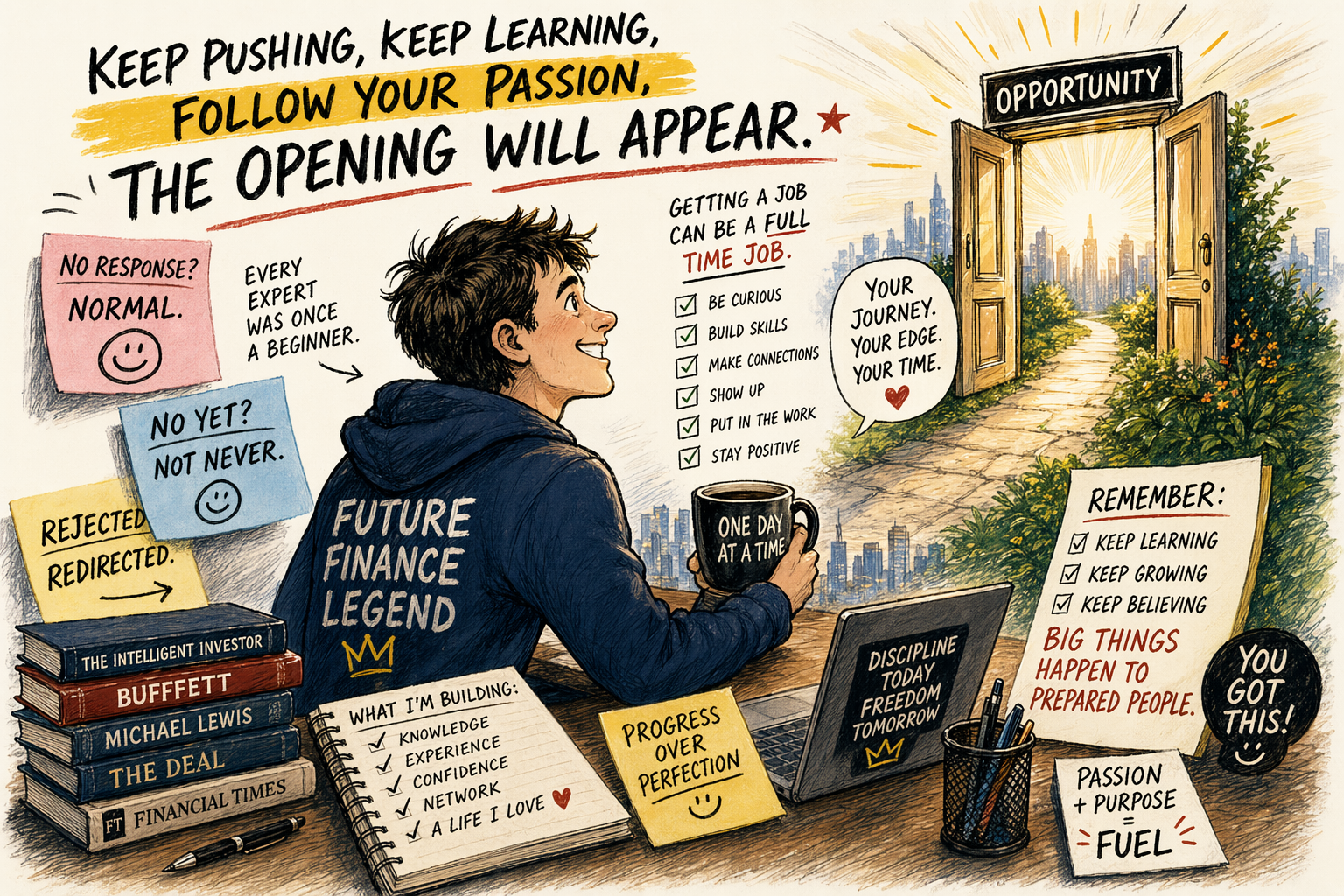
Don’t get disheartened when you don’t get a response or a yes - it’s normal. Try a different approach. Getting a job can be a full time job. Keep pushing, learning and following your passion and the opening will appear.